
I Was a Gullible Reader: Then and Now
... but that's okay! Sometimes.

Dear Fellow Reader,
I wonder if you’re having as hard a time concentrating on a book as I am. When I wrote the post below, exactly four years ago, I was eager for nonfiction day and night. Now, the real world is writ large all around and by the end of the day, a gentle, illustrated fantasy, perhaps a children’s classic, is better for a restful night.
Celebrate books! Here is my Postcard from September 27, 2021:
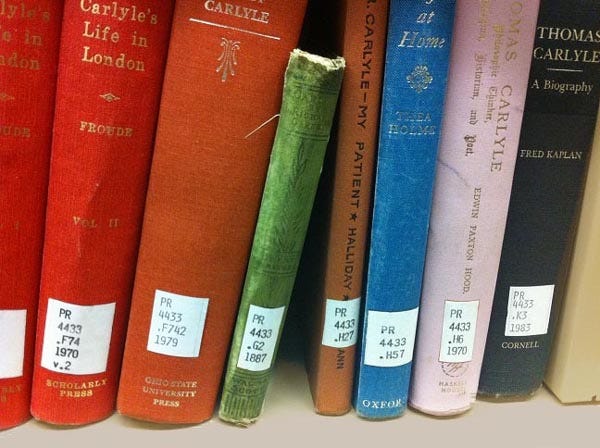
Have you ever read an unbelievable book that you marveled over because you thought it was true? After all, it had a non-fiction call number. (I used to work in a library.)
But can fiction hide behind a false label?
Yes it can. It happened to me, which I say with a blush, in the 1980’s when I fell for Shirley MacLaine’s Out on a Limb. I might have been in the middle of a sequel such as Dancing in the Light when it hit me. This man she’s saying dematerializes, or materializes … it just doesn’t sound right. Shirley, you went too far.
I was reading fiction in the name of biography. FIC MacL instead of B MacLaine.
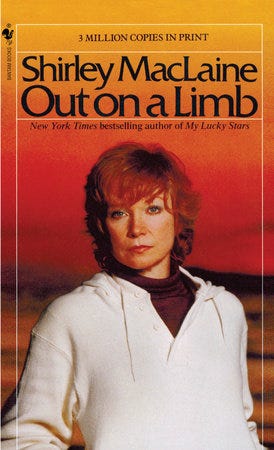
But to be kind, I must have really, really wanted to believe what she was saying, maybe this:
"So," he went on, "when you concentrate on what would make you happy, you actually produce an electromagnetic frequency which operates internally and literally soothes you into a feeling of inner peace."
But it’s so interesting, making a career out of fantasy. On Oprah Winfrey’s TV show in 2005 James Frey told his bestselling story to her many book club readers.

By January 2006 it was revealed that Frey had been in jail only a few hours instead of two months, etc. Oprah had him back on her show to vent her outrage. “I feel duped,” she told him on camera, “… you betrayed millions of readers.” (The book was called A Million Little Pieces.) Frey’s second book was a bestseller, too. I didn’t read either one, and I never saw the movie.
But I’m more interested in classic artifice, a genre of great books whose wisdom seems to depend on a seductive simplicity of situation. Take Henry David Thoreau’s Walden Pond.
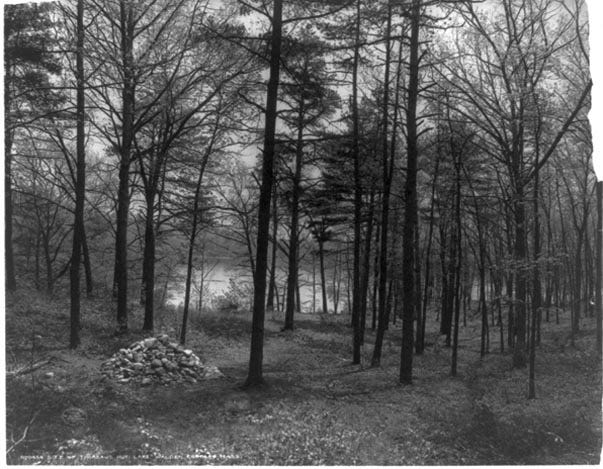
When I first read Walden Pond, or perhaps parts of it, I supplied all the imagination Thoreau requested. I pictured an isolated, purely natural setting where one could line up his views about what makes a good life, like Mason jars on a pantry shelf.
But now I know Thoreau’s two year stay at Walden Pond wasn’t the life of a hermit in a remote, unspoiled environment. He built his cabin in a suburb of Concord on Ralph Waldo Emerson’s property in exchange for helping clear the land. His mother did his laundry and helped out with meals. And it took Thoreau seven years to write his famous one-year journal of essays.
As Katherine Schulz writes about Walden Pond in a New Yorker article,
The commuter train to Boston ran along its southwest side; in summer the place swarmed with picnickers and swimmers, while in winter it was frequented by ice cutters and skaters.
But of course this is not the point. We love this book because what has lasted is the idea of a life removed from everyday stress. The author shows it’s possible to live in the woods by your own labor in a house you build yourself. This book in your hand is the perfect plan, eternally possible and blissfully free from reality.
I agree with the words of my dear daughter, Stephanie, and will let them reflects my exact thoughts. We both love that you celebrate books, Deda.
BTW--I met Shirley Maclaine one time at a political fundraiser (we had a good laugh). At one time I had all of her books (autographed). Alas, I no longer have them.
Thank you for celebrating books, Deda! I definitely agree with reading whatever helps you wind down. Also, these examples of popular half-truths that were published decades ago make me feel a little hopeful that we can survive AI, because these kinds of misrepresentations have been with us for many years, especially "white-washing," "sanitizing," and lying about our U.S. history.
Thank you for always making me reflect on our world.